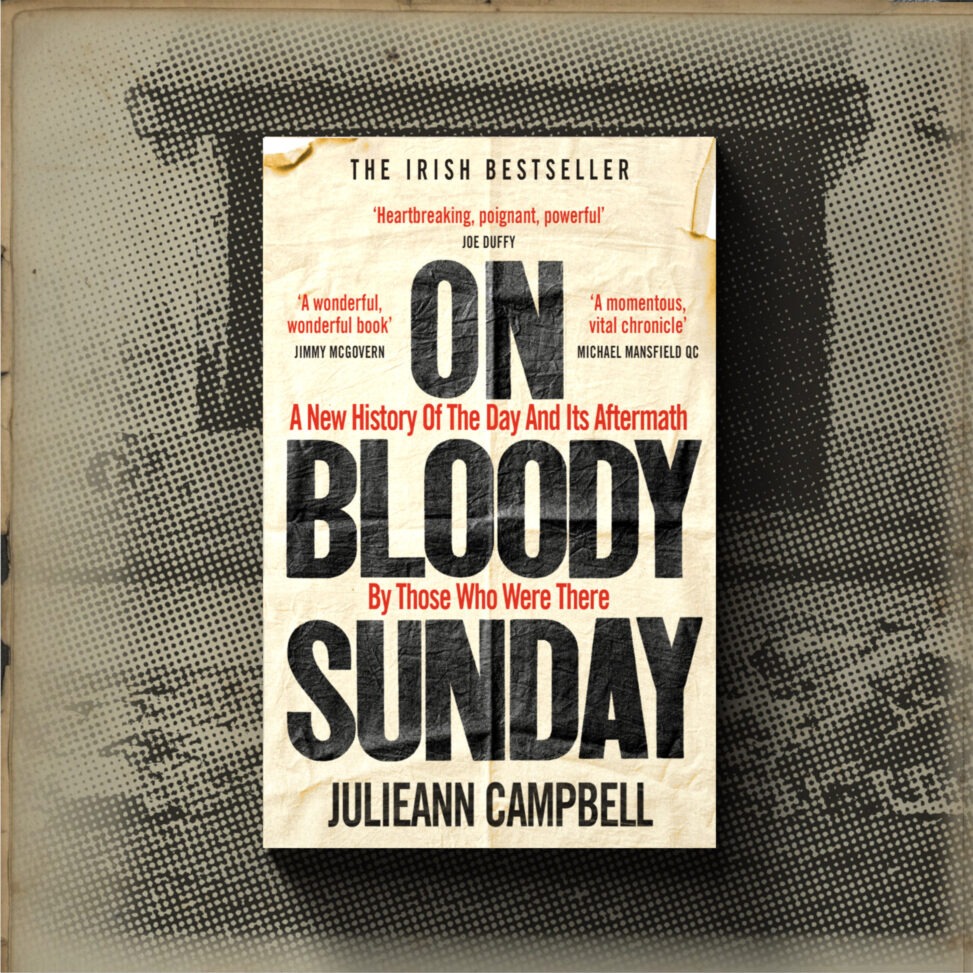
In January 1972, a peaceful civil rights march in Northern Ireland descended into a massacre. Soldiers from Britain’s 1st Battalion Parachute Regiment opened fire on unarmed marchers, killing 13 people and wounding 15 others. Seven of the victims were mere teenagers. History remembers this tragedy as ‘Bloody Sunday.’
Despite the glare of the international press, the British military immediately claimed victory in an IRA gun battle. This false narrative persisted for decades until a relentless, family-led campaign forced one of the most complex inquiries in legal history. Finally, in 2010, Lord Saville fully exonerated the victims, proving they were shot while fleeing or helping the wounded.
While many suppressed the trauma, historian and campaigner Julieann Campbell—whose teenage uncle was the first victim that day—spent years documenting the truth. She meticulously collected rare, unpublished interviews and eyewitness testimonies, recognizing their immense historical value.
Fifty years after the tragedy, On Bloody Sunday brings these voices together for the first time. Survivors, relatives, and witnesses recount the tension, confusion, and raw anger of the day with extraordinary power. This is more than a book; it is a vital human drama that reveals the true cost of conflict and restores dignity to those silenced for half a century.
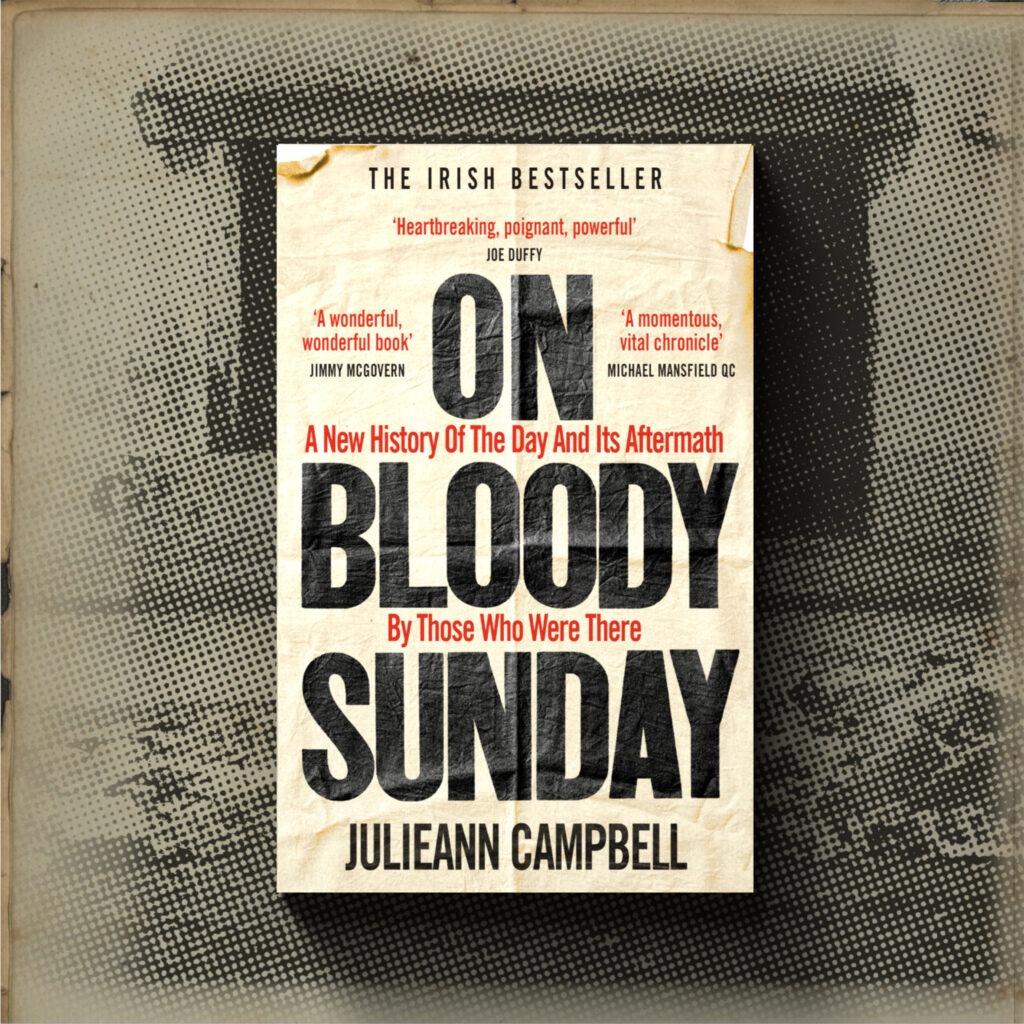
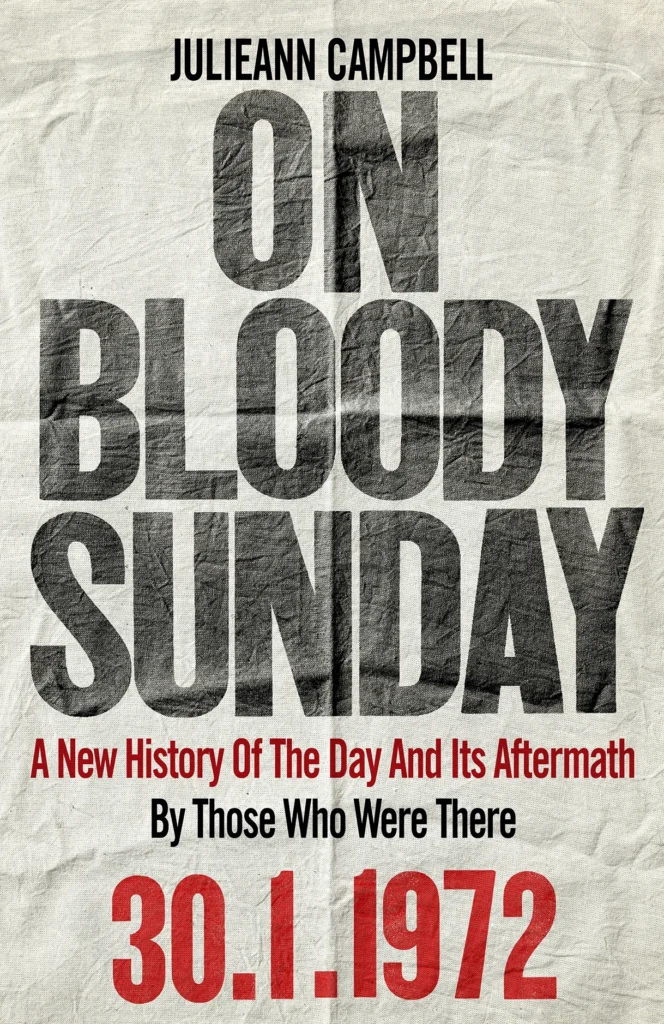
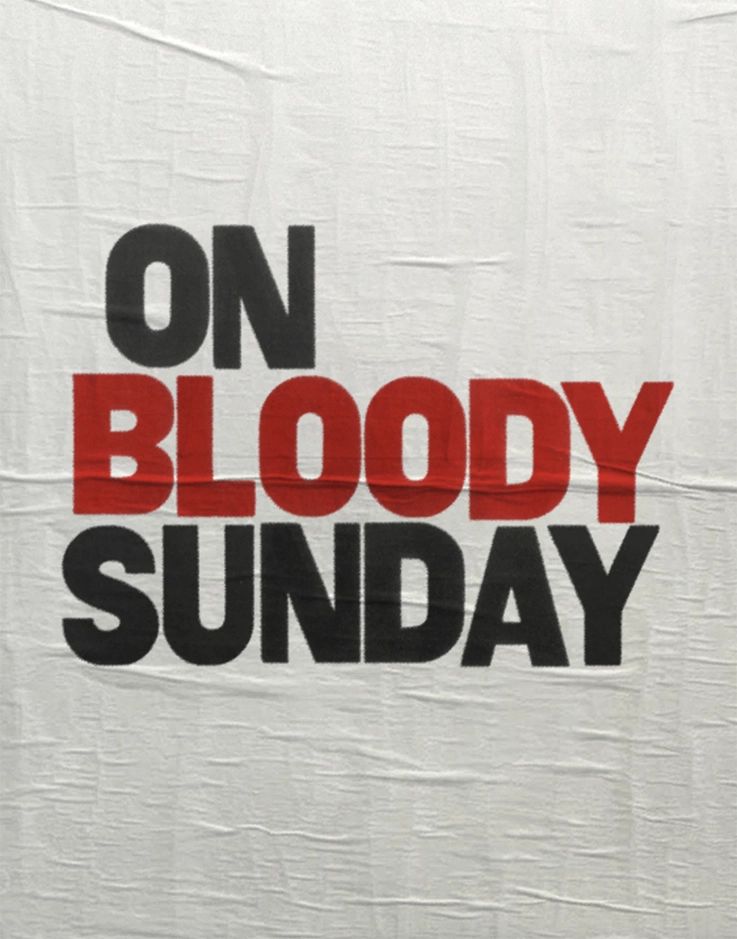
The approach focused on creating a vessel for the narrative rather than an interpretation of it. Given the gravity of the firsthand accounts, we opted for a stark, typographic-led hierarchy that mirrors the directness of the testimony within. We utilised a heavy, condensed sans-serif to ground the title with a sense of journalistic urgency, while the deliberate use of negative space allows the weight of the historical context to breathe. By avoiding over-wrought imagery and focusing on high-contrast production values, the design serves as a quiet but authoritative framework, ensuring the survivors’ voices remain the undisputed focal point of the physical object.
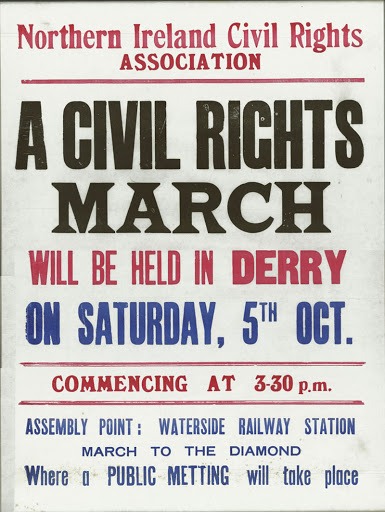
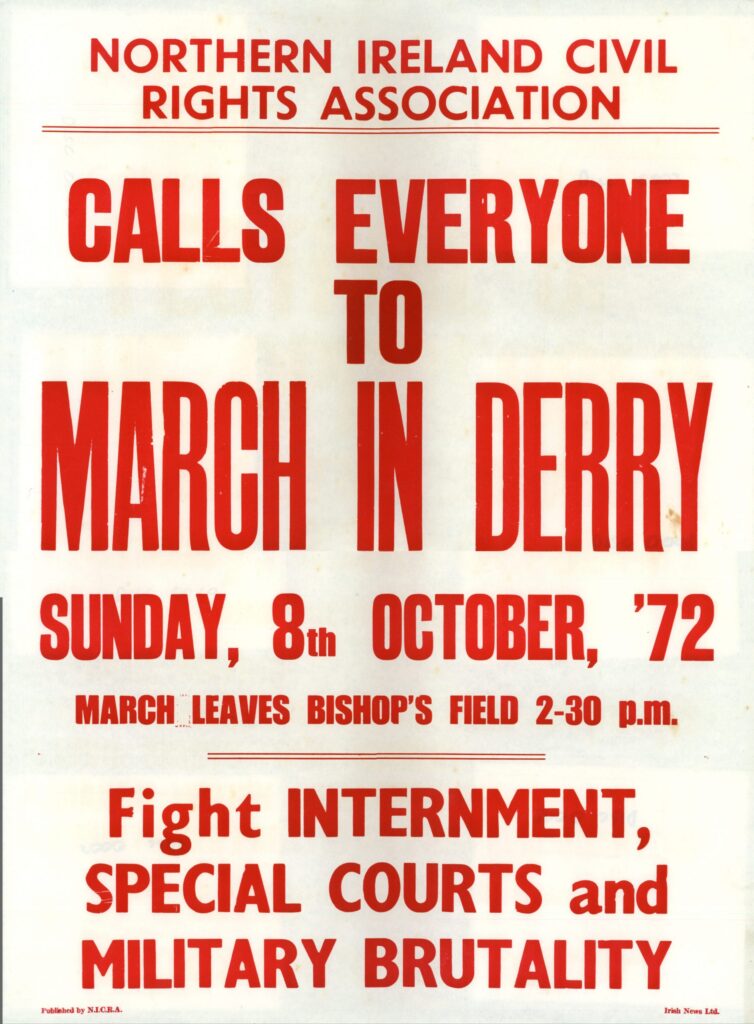
Using design reference from the Museum of Free Derry
Original early protest poster 1968